


Carbon monoxide is a colorless, odorless gas produced when fuel does not burn completely. A gas furnace is designed to vent it outside, and a healthy furnace does. Problems start when something goes wrong: a cracked heat exchanger, a blocked flue or poor ventilation. Because you cannot smell it, the only warning is an alarm that works.
This guide covers what California law requires, where alarms go, what the symptoms look like, and what to do if one sounds in your home.
What California requires
California Health and Safety Code section 17926, which came out of SB 183, requires a State Fire Marshal approved carbon monoxide device in each dwelling unit that has any of these:
- A fossil fuel burning heater or appliance
- A fireplace
- An attached garage
Existing single-family homes were required to comply by July 1, 2011, and other existing dwelling units by January 1, 2013. Almost every Sacramento-area home with a gas furnace is covered. The law is aimed at owners, and landlords should confirm their obligations. The wording of codes can change, so check the current rules with your city building department or the State Fire Marshal.
Where to put the alarms
The Consumer Product Safety Commission recommends:
- An alarm on every level of the home
- An alarm outside each sleeping area
- No alarms near heating vents or behind furniture, where airflow can interfere with them
The EPA adds that alarms should be at least 15 feet away from fuel-burning appliances. Always follow the instructions on the alarm you buy, because mounting height and placement rules vary by model.
How long alarms last
Alarms wear out. The CDC advises replacing carbon monoxide alarms on the manufacturer’s schedule, or about every five years if you have no instructions. Check the date printed on the back. Test each alarm when you change your clocks, as the CDC suggests, and replace the batteries at the same time. In 2026 the clocks go back on Sunday, November 1.
Symptoms of carbon monoxide poisoning
The CDC lists these symptoms of carbon monoxide exposure:
- Headache
- Dizziness
- Weakness
- Upset stomach and vomiting
- Chest pain
- Confusion
The symptoms can feel like the flu, which is why poisoning is often missed. Sleeping people can be harmed before they notice anything. If several people in the home feel unwell at once, or the symptoms fade when you leave the house, treat it as a possible carbon monoxide problem and get outside.
What to do if the alarm sounds
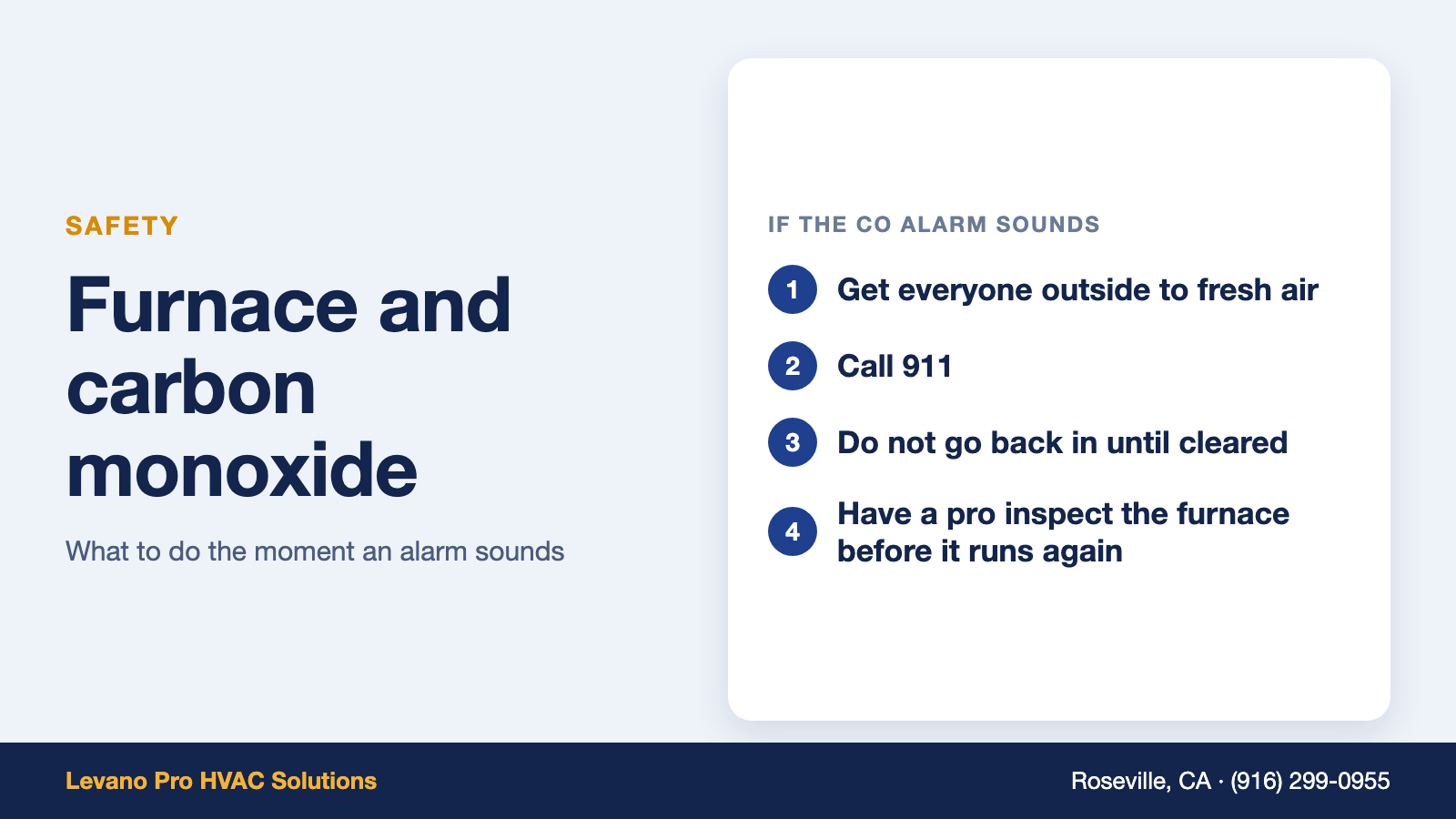
- Get everyone outside into fresh air right away, including pets.
- Call 911 or the fire department from outside.
- Do not go back in until responders say it is safe.
- Do not restart the furnace. Have a licensed technician inspect it first.
A single chirp about once a minute usually means a low battery, according to the National Fire Protection Association. Replace the battery. If the chirp continues, call the fire department or the alarm manufacturer for advice.
The furnace connection: heat exchangers
Inside a gas furnace, the burners heat a metal heat exchanger. Air from your home blows across the outside of it, and the combustion gases travel through the inside and out the flue. If the metal cracks, those gases can mix with household air. Carrier and Trane both warn that a cracked heat exchanger can allow carbon monoxide into the home. Their advice is to turn the furnace off, leave the home if an alarm sounds, and have a professional inspect it before running it again. Trane does not recommend repairing a cracked exchanger. In most cases the choice is replacing the furnace, which our guide on when to replace a furnace explains.
The Department of Energy lists a heat exchanger crack check, a flue and venting inspection and a carbon monoxide test among the parts of a yearly professional furnace tune-up. Our tune-up guide shows what a complete visit includes, and our maintenance service page covers scheduling.
Other warning signs around a furnace
- A burning plastic or electrical smell, or a rotten egg smell, when the furnace runs. If you smell gas, leave, call 911, then your gas utility. See furnace smells like burning or gas.
- A furnace that will not stay lit or shuts down repeatedly. See furnace will not turn on.
- Soot or discoloration around the furnace or vent pipe.
We service furnaces across Roseville, Rocklin, Folsom and Elk Grove. If you think your furnace is unsafe, read about our heating and furnace services or contact us. We answer emergency calls 24/7, including weekends.
Frequently asked questions
Does California require carbon monoxide alarms?
Yes. California Health and Safety Code section 17926 requires a State Fire Marshal approved carbon monoxide device in each dwelling unit that has a fossil fuel heater or appliance, a fireplace or an attached garage. Existing single-family homes were required to comply by July 1, 2011. Codes change, so confirm the current wording with your city or the State Fire Marshal.
Where should I put a carbon monoxide alarm?
The Consumer Product Safety Commission says to install alarms on every level of the home and outside sleeping areas, and to avoid spots near heating vents or behind furniture. The EPA adds that alarms should be at least 15 feet from fuel-burning appliances. Follow the instructions that come with your alarm.
How long does a carbon monoxide alarm last?
Replace it on the manufacturer’s schedule. The CDC advises replacing alarms about every five years if the instructions do not say otherwise. Many alarms also give an end-of-life signal.
What does a chirping carbon monoxide alarm mean?
A single chirp every minute or so usually means a low battery. Replace the battery. If it keeps chirping, contact the fire department or the manufacturer. A continuous alarm pattern means leave the building first and investigate later.
Can a gas furnace leak carbon monoxide?
Yes, if it is damaged or poorly vented. A cracked heat exchanger or a blocked flue can let combustion gases, including carbon monoxide, into the home. That is why a yearly professional inspection includes the heat exchanger and a carbon monoxide test at the appliance.