


This question means different things depending on how old your furnace is. Older furnaces have a standing pilot, a small flame that burns all the time. Most furnaces made in the last twenty-odd years have no pilot at all and light electronically. Figure out which one you have first, because the causes are different.
Which kind do you have?
- Standing pilot. You can see a small blue flame through the viewing window when the furnace is idle, and there is usually a knob marked OFF, PILOT and ON on the gas valve. Common in Sacramento homes from before the mid 1990s, especially in older parts of Carmichael, Arden-Arcade, Land Park and Citrus Heights.
- Electronic ignition. No flame when idle. When the thermostat calls for heat, you hear the inducer fan, then see a glowing hot surface igniter or hear spark clicking, then the burners light.
Standing pilot keeps going out
A worn thermocouple
The most common cause. The thermocouple is a small metal rod that sits in the pilot flame and tells the gas valve the pilot is lit. When it wears out, it stops sending enough signal and the valve shuts the gas off, so the pilot goes out a few seconds after you let go of the button. It is an inexpensive part.
A dirty pilot orifice
Dust and debris clog the tiny opening the pilot flame burns from. The flame gets weak, yellow or lazy, stops heating the thermocouple properly, and goes out. A healthy pilot flame is steady and mostly blue, and it wraps around the tip of the thermocouple.
A draft
A furnace in a garage or a drafty closet can have its pilot blown out by air movement, especially on windy days. Missing burner access panels make it worse.
A kinked or misaligned thermocouple
If the thermocouple has been bumped out of the flame, it cannot sense it. Sometimes the fix is simply repositioning it.
Relighting a standing pilot
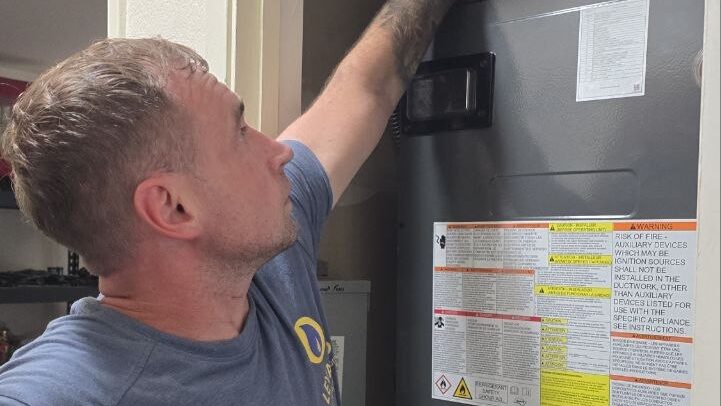
Follow the lighting instructions printed on the label inside your furnace door, because the steps differ between models. If the pilot will not stay lit after following them, stop relighting it and have it looked at. Repeated attempts are not the fix.
Electronic ignition will not light
If your furnace has no standing pilot and it will not light, the usual causes are:
- A cracked or worn hot surface igniter. The ceramic element that glows orange. If it does not glow, it has likely failed. A common and inexpensive part.
- A dirty flame sensor. The burners light for a few seconds and then shut off. The sensor cannot confirm the flame and the board cuts the gas as a precaution. Often fixed by cleaning.
- A pressure switch that will not close. Often caused by a blocked vent or a clogged condensate trap on a high efficiency furnace.
- No gas. Check the gas valve on the supply pipe is turned in line with the pipe and that your stove burners light.
Our article on a furnace blowing cold air goes through the ignition sequence step by step, and furnace will not turn on covers the electrical side.
The safety part
If you smell gas, do not try to relight anything. Leave the house, take everyone with you, and call PG&E at 1-800-743-5000 or 911 from outside. Do not operate switches on your way out. Our article on furnace smells covers the difference between normal first-use dust smell and a real gas smell.
If the pilot or burner flame is large, yellow, or rolling out of the burner area, turn the furnace off. That is a combustion problem, not an ignition problem.
Is an old pilot furnace worth fixing?
A thermocouple is worth replacing on almost any furnace. But a standing pilot furnace is typically old, and if it also has a cracked heat exchanger, a failing inducer or repeated repairs, it may be time to price a replacement. Our article on when to replace a furnace helps with that decision.
What we do
We check the pilot flame, test the thermocouple output, clean the pilot orifice or the flame sensor, and take a carbon monoxide reading on every gas furnace visit. Our diagnostic is a flat $69 and it is credited toward the repair. See furnace repair in Sacramento or Roseville.
Frequently asked questions
Why does my furnace pilot light keep going out?
The most common cause is a worn thermocouple that no longer tells the gas valve the pilot is lit. A dirty pilot orifice, a draft, or a thermocouple bumped out of the flame are the other usual causes.
Can I relight my furnace pilot light myself?
Yes, following the lighting instructions on the label inside your furnace door. If it will not stay lit after that, stop and have it checked instead of relighting it repeatedly.
What color should a pilot light be?
Mostly blue and steady, wrapping around the tip of the thermocouple. A weak, yellow or flickering flame usually means a dirty pilot orifice.
My furnace does not have a pilot light. Why will it not ignite?
Newer furnaces use electronic ignition. The usual causes are a failed hot surface igniter, a dirty flame sensor, a pressure switch that will not close, or no gas supply.
Is it dangerous if my pilot light keeps going out?
The gas valve shuts off gas when the pilot goes out, so it is designed to be safe. If you smell gas, leave the house and call PG&E or 911 from outside.
How much does it cost to replace a thermocouple?
It is an inexpensive part and a short visit. Our diagnostic is $69 and credited toward the repair, and we quote the work before starting.