


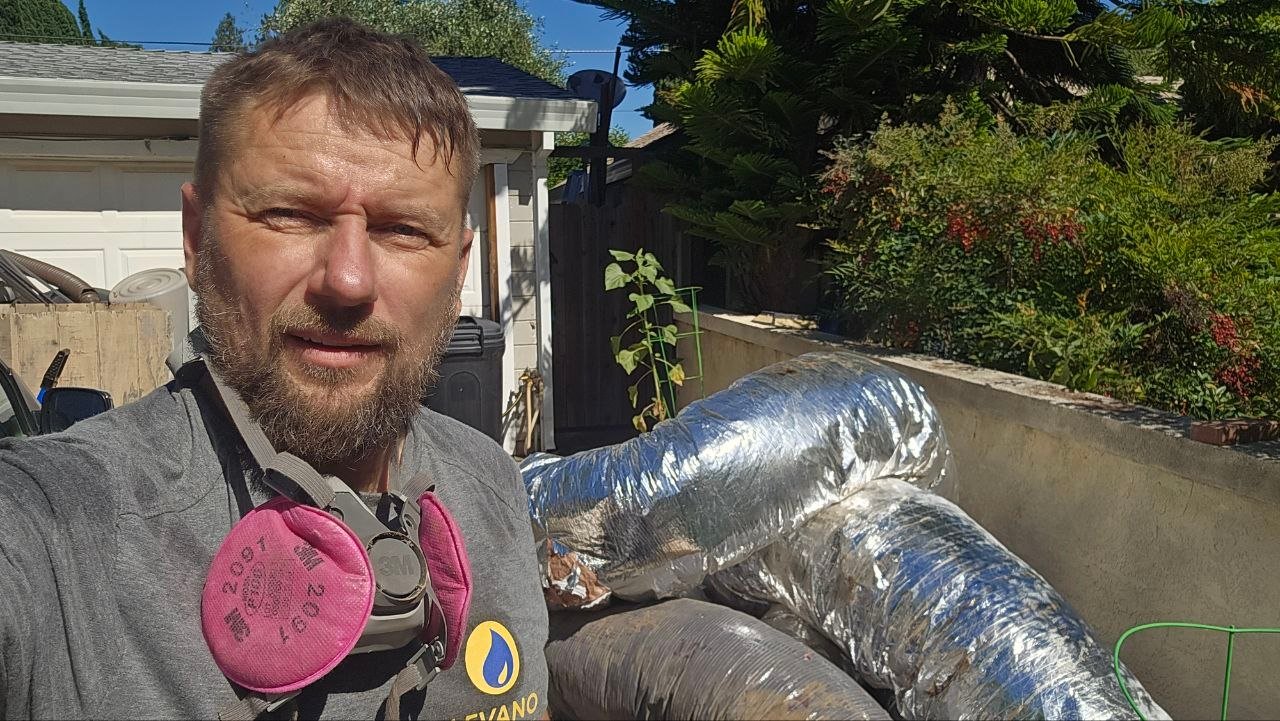
We say it on almost every service page: the equipment is fine, the problem is the ducts. This is the article that says what to actually do about it. The Sacramento area has three generations of duct systems, they fail in different ways, and the answer is not always replacement. Here is how the decision works, what each option costs, and how the test that settles it is done.
Why the ducts matter more here than the brand on the condenser
ENERGY STAR’s figure is that a typical home loses 20 to 30 percent of the air moving through its ducts to leaks, holes and bad connections. In the Sacramento area that air is being lost into an attic that reaches 130 degrees in July or a crawlspace at 50 degrees in January. The system runs longer to make up the difference, the far rooms never quite get there, and a new high-efficiency unit connected to the same ducts performs like the old one. It is also why California’s Title 24 requires a duct leakage test when the air handler is replaced: existing ducts have to come in at 15 percent leakage or better, and most 1990s systems do not without work.
The three kinds of ductwork in Sacramento homes
- 1920s to 1940s: retrofitted. Land Park, East Sacramento, Curtis Park, Oak Park. The house was built with a floor furnace or gravity heat; ducts were added later, wherever they would fit, often undersized and often a mix of materials from several decades of work.
- 1950s to 1970s: original sheet metal in the crawlspace or attic. Arden-Arcade, Carmichael, Citrus Heights, Rancho Cordova, the older side of Folsom and Rocklin. Metal trunk lines, rigid branches, joints sealed with cloth tape that turned to dust twenty years ago. The return is sized for a much smaller furnace than the one now connected to it.
- 1990s to 2010s: flex duct in the attic. Natomas, Elk Grove, Roseville, Rocklin, Folsom tracts. Insulated flexible duct run from an attic air handler, installed fast by builders. Common faults: crushed runs, sagging sections that pool air, connections pulled loose at the boots, and inner liners that have separated from the outer jacket.
The test that decides it
Before anyone quotes sealing or replacement, the ducts should be pressure tested. The registers are taped off, a calibrated fan pressurizes the system, and the leakage is measured as a percentage of the system’s airflow. It takes under an hour and, as a standalone service, the national guides put it at $150 to $450; we include it in the diagnostic when duct work is on the table. Then the number tells you what to do:
- Under 15 percent on an existing system: the ducts pass code. Sealing may still be worth it for comfort, but it is optional.
- 15 to 30 percent: sealing is the usual answer, and it usually brings the system under 15.
- Over 30 percent, or ducts that are crushed, disconnected, undersized or full of rodent damage: sealing is patching a bad system. Replacement is the honest recommendation.
Duct sealing: what it is and what it costs
Manual sealing means a technician goes through the attic or crawlspace, reconnects loose boots, replaces failed tape with mastic and metal-backed tape, seals the plenums at the air handler, and insulates bare sections. The 2026 national guides put a typical duct sealing job between $500 and $4,000, with an average around $2,250, or roughly 50 cents to $1.50 per square foot of house. The Sacramento specifics that move it: attic access on a two-story home, how many runs there are, and whether the return has to be enlarged at the same time, which in the 1960s ranch homes it usually does.
Aerosol sealing, the best-known brand being Aeroseal, pressurizes the ducts with a sealant fog that finds and plugs small leaks from the inside. National ranges run from about $1,300 to $3,000, with some quotes higher. It is excellent for many small leaks in ducts that cannot be reached and useless for a disconnected boot or a crushed run, so it is often paired with manual work.
Duct replacement: what it costs and when it is the right call
The national guides put full replacement at roughly $25 to $55 per linear foot, or $1,400 to $7,000 for a typical home, with the average near $3,500. The Sacramento cases where we recommend it rather than sealing:
- Crushed or kinked flex duct in a 2000s attic that has been stepped on for twenty years.
- Rodent damage, common in crawlspace systems and in attics near open fields, which contaminates the insulation and the inner liner.
- An undersized system that cannot deliver the airflow a modern unit needs no matter how well it is sealed. This is the standard story when a larger furnace was connected to a 1960s return.
- Asbestos-era materials in the oldest homes, which require abatement rather than repair.
- The system is being replaced anyway. Replacing ducts alongside the equipment is cheaper than doing them separately, and it is the only way to guarantee the new system passes the Title 24 test at 5 percent for new ducts.
When neither helps
If the complaint is one hot room upstairs in a two-story home, the ducts may be fine and the problem is a single system trying to serve two floors on one thermostat. Sealing will not fix that; zoning or a mini-split for that room will. If the complaint is a system that runs constantly and never catches up, and the ducts test clean, the equipment is undersized or failing, and that is a different conversation. We test before we recommend, and we tell you which of the three it is.
What we do
Duct leakage testing, manual sealing, return enlargement, and full replacement, including the HERS verification California requires when ducts are touched alongside equipment. We quote sealing and replacement side by side when the test puts you in between, and we say plainly when the ducts are not the problem. Our ductwork page covers the service; our guide to why a heating bill is so high explains why ducts sit at the top of that list. Diagnostic is a flat $69 across Sacramento, Roseville, Rocklin, Folsom, Citrus Heights and Elk Grove, credited toward any work.
The clearest symptom of leaking attic duct work in a two story home is a hot upstairs that never catches up. That pattern and the fixes that actually work are in upstairs hot, downstairs cold.
People often ask whether cleaning would do the same job as sealing. Usually it does not, and the EPA is blunt about why. We cover it in is air duct cleaning worth it.
Frequently asked questions
How much does duct sealing cost?
The 2026 national guides put a typical job between $500 and $4,000, with an average around $2,250. Aerosol sealing runs roughly $1,300 to $3,000. Attic access, the number of runs and whether the return needs enlarging move the number in Sacramento-area homes.
How much does duct replacement cost?
Roughly $25 to $55 per linear foot, or $1,400 to $7,000 for a typical home in the national guides, with the average near $3,500. Replacing ducts alongside new equipment is cheaper than doing them separately.
How do I know if my ducts are leaking?
A pressure test measures leakage as a percentage of system airflow. Under 15 percent passes California code for existing ducts. Signs before testing: rooms that never reach temperature, a system that runs constantly, dust around registers, and a hot attic that smells like conditioned air.
Is duct sealing worth it?
When the test shows 15 to 30 percent leakage, usually yes, and it is often the best return on money spent on a heating and cooling system in this climate. Over 30 percent, or with crushed or rodent-damaged ducts, replacement is the honest answer.
Do you clean ducts?
No. We test, seal, repair and replace ductwork. Duct cleaning is a separate service that we do not offer, and in most homes sealing does more for comfort and bills than cleaning would.