


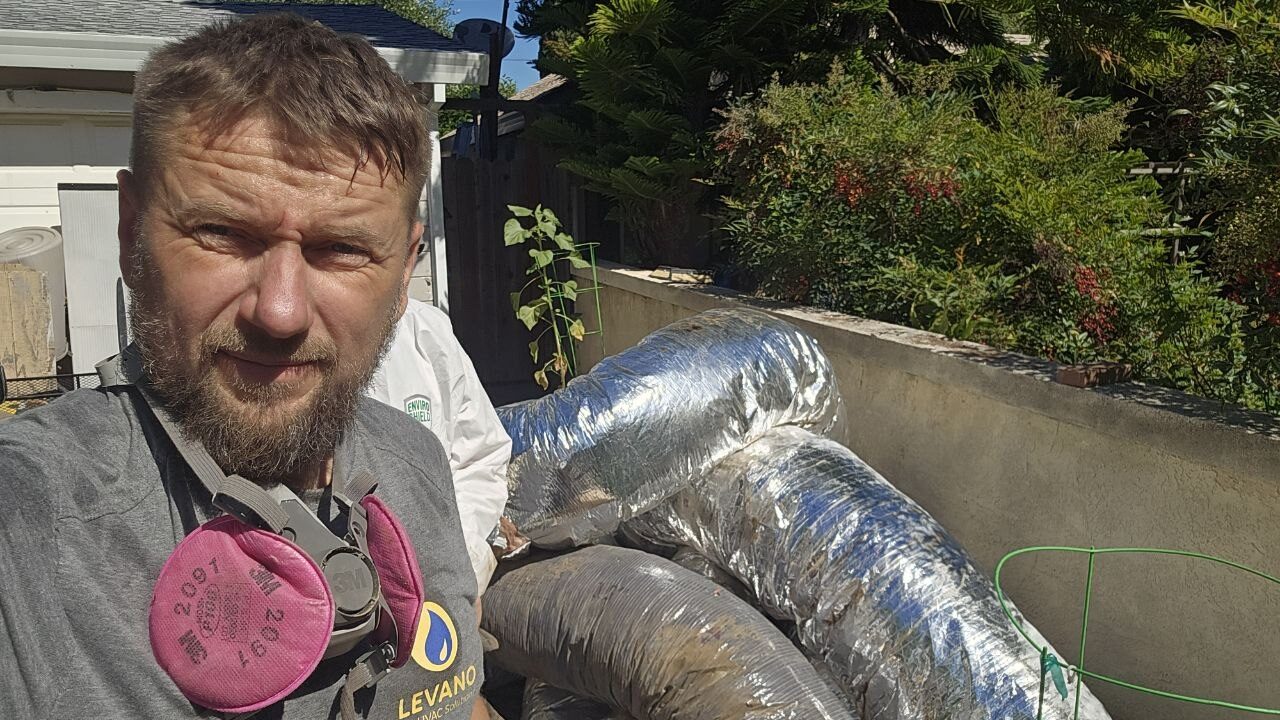
Ducts are easy to forget because they are hidden in the attic or crawl space. In many homes they leak a surprising amount of conditioned air, and in the Sacramento area an attic duct can sit in much hotter air than the house. Sealing leaks is often one of the most cost-effective HVAC upgrades.
What ENERGY STAR says
ENERGY STAR says leaky ducts can reduce heating and cooling system efficiency by as much as 20 percent. Its duct sealing guidance says to seal and insulate the ducts, and that doing so can pay for itself over time. Sealing can also let a contractor use smaller equipment in some cases, and it reduces the risk of backdrafting from leaky returns near combustion appliances.
Signs your ducts are leaking
- Some rooms are always hotter or colder than the thermostat setting
- Energy bills that seem too high for the home’s size
- Dust coming from supply vents or the return grille
- Whistling, rattling or banging in the ducts
- The system runs for long periods and does not keep up
- Visible gaps, disconnected sections or crushed flex duct in the attic
See why upstairs is hot and downstairs is cold and why do my air ducts make noise.
How leakage is tested
A technician seals the registers and connects a calibrated fan to the system. The fan pressurizes the ducts to 25 pascals, and the instrument reads how much air escapes, in cubic feet per minute. That number is divided by the system airflow to give a leakage percentage. A visual and smoke test can also find leaks. Testing turns an opinion into a number and is the only way to prove a repair worked.
California’s duct rules
Under California’s energy code, replacing equipment or altering ducts can trigger sealing and testing. Under the 2025 code, an altered duct system must meet a limit of 10 percent of airflow in total or 7 percent to the outside. If that limit cannot be met, the contractor must seal all accessible leaks and pass a smoke test verified by a rater. See HVAC permits in the Sacramento area for how that fits with a permit.
What it costs
Fixr’s cost guides, last updated in August 2025, list about $1,000 to $3,000 for duct sealing and about $200 to $1,000 for smaller ductwork repair. Replacing ducts is more expensive, at about $1,400 to $17,100 with an average near $9,300. Your price depends on access, the size of the system and how many leaks there are. Our guide on duct sealing vs replacement cost explains how to decide.
Repair or replace
- Seal when the ducts are intact and the leaks are at joints, boots and connections.
- Replace when the ducts are crushed, torn, undersized, contaminated by water or very old. See how long ductwork lasts.
- Redesign when the duct size does not match the system. See what size ductwork do I need.
What a good duct repair visit includes
- A leakage test before the work starts
- Sealing the joints, boots and connections with materials meant for ducts
- Insulating ducts in unconditioned spaces
- A second test to confirm the result
- A written report you can keep
Ask for the before and after numbers. We service ducts and systems across Roseville, Rocklin, Folsom and Elk Grove. See our HVAC services or contact us.
Frequently asked questions
How much energy do leaky ducts waste?
ENERGY STAR says leaky ducts can reduce heating and cooling system efficiency by as much as 20 percent. Losses are often worse in ducts in attics and crawl spaces, where leaked air is lost outside the conditioned space.
How much does leaky duct repair cost?
Fixr lists duct sealing at about $1,000 to $3,000 and smaller ductwork repairs at about $200 to $1,000, in guides last updated in August 2025. Replacing ducts costs far more, with Fixr listing $1,400 to $17,100 and an average near $9,300.
How do I know if my ducts are leaking?
Common signs include rooms that stay too hot or cold, high energy bills, dust around vents, noisy ducts and a system that runs constantly. The only way to know the amount is a duct leakage test with a calibrated fan.
What does California require for duct leakage?
Under the 2025 code, an altered duct system must meet a limit of 10 percent of airflow in total or 7 percent to the outside, or the contractor must seal all accessible leaks and pass a rater verified smoke test. The 2022 code had similar rules for altered systems.
Can I seal my own ducts?
Minor accessible leaks can be sealed by a homeowner, but any work on HVAC equipment needs a licensed contractor, and a permit when the system or ducts are altered. Testing with a fan is the way to confirm the result.