


There are far fewer HVAC manufacturers than there are HVAC brands. That’s the whole trick of this industry, and once you see it, shopping gets a lot easier. Six companies build most of what goes on the side of American houses, and they sell it under two dozen different badges at two dozen different prices.
So a list of the best HVAC brands isn’t really a list of factories. Every top HVAC brands ranking you’ll read is sorting badges, service networks and warranties, not the machines that build them. Here’s the map, and how to use it.
Who actually makes your HVAC system
If you are searching for the best HVAC manufacturers rather than the best badges, this is the actual list. Here is the ownership picture as of 2026:
- Carrier Global — Carrier, Bryant, Payne, Heil, Tempstar, Comfortmaker, Day & Night, Arcoaire.
- Trane Technologies — Trane and American Standard, built on the same engineering. See our American Standard review.
- Daikin — Goodman and Amana. Daikin is the largest HVAC manufacturer in the world by revenue, bought Goodman back in 2012 for around $3.7 billion, and renamed its US arm Daikin Comfort Technologies North America in 2022.
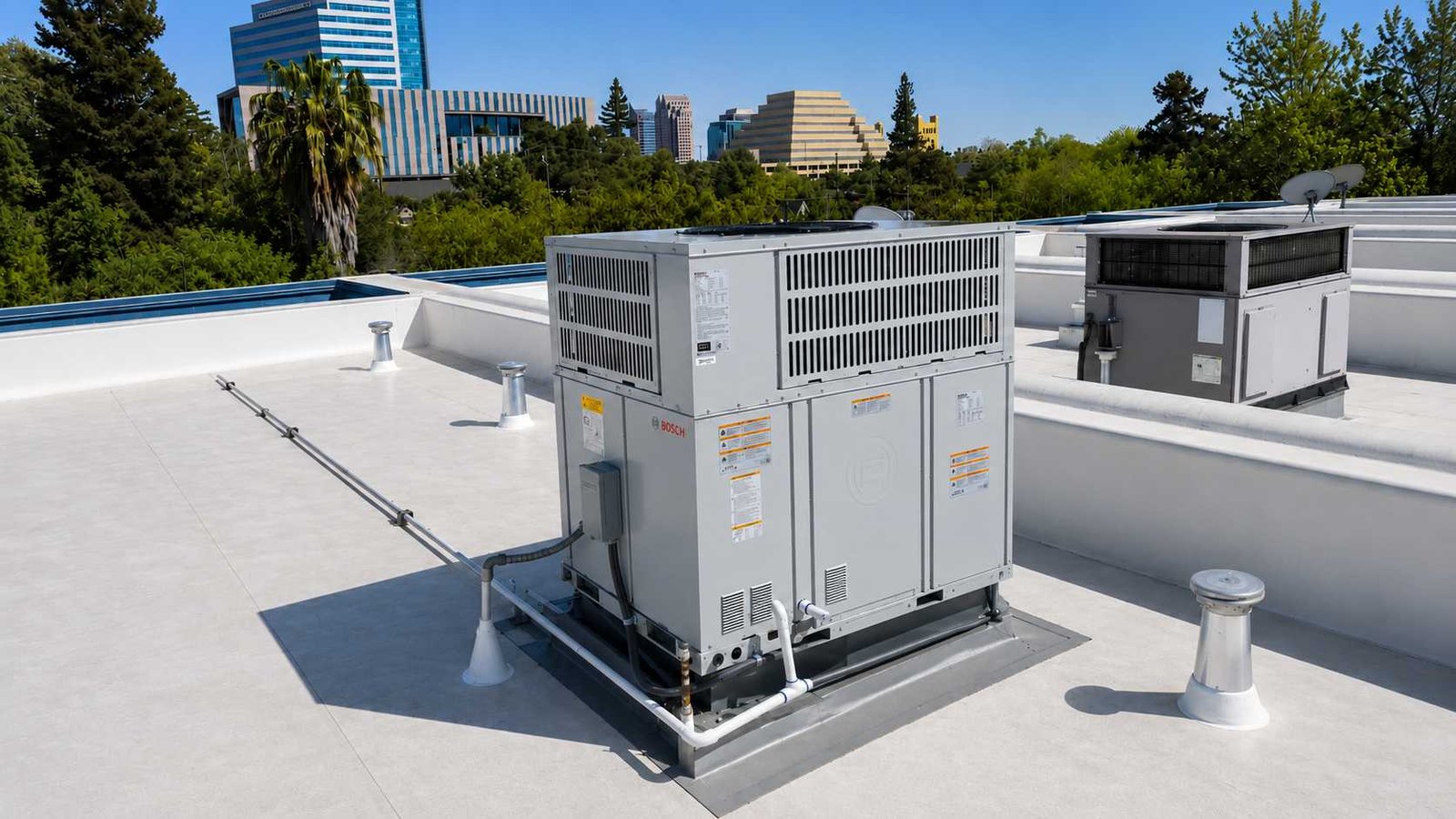
- Bosch — York, Hitachi, Coleman, Champion, Luxaire, Guardian, Evcon, TempMaster. This one is new and most brand lists still have it wrong: Bosch closed its purchase of Johnson Controls’ residential and light commercial HVAC business on July 31, 2025, an $8.1 billion deal and the biggest in Bosch’s history.
- Rheem Manufacturing — Rheem and Ruud. Rheem itself sits under Paloma Industries. This entry is out of date on most brand lists: Rheem bought Nortek Global HVAC from Madison Industries in October 2024 and folded it into its Global Air division, which brought Frigidaire, Maytag, Broan, Gibson, Miller and Intertherm HVAC under the same roof. Rheem also owns Friedrich, WeatherKing, Sure Comfort, Richmond and Raypak. Full Rheem air conditioner review here.
- Lennox International — Lennox as the flagship, plus Armstrong Air, AirEase, Concord, Ducane and MagicPak through its Allied Air subsidiary. Worth knowing, because Armstrong was one of the two reliability standouts in Consumer Reports’ member survey and almost nobody realises it is Lennox engineering.
- Midea Group — the largest air conditioner maker in the world by volume, and a major supplier of components to other brands. Full Midea air conditioner review here.
Read that list again and a few things jump out. Bryant is a Carrier. American Standard is a Trane. Lennox gets a full write-up in our Lennox air conditioner review. Trane is covered in our Trane air conditioner review. Carrier itself gets a full breakdown in our Carrier air conditioner review. Amana is a Goodman, and Goodman itself is worth a closer look in our Goodman air conditioner review. York is now a Bosch. None of that is a scandal, it’s just how the industry is built, but nobody selling you a system is in a hurry to mention it.
Why the map saves you money
Two badges from the same parent often share compressors, coils and control boards while carrying different price tags and different dealer networks. Trane and American Standard are the cleanest example: same engineering, different name on the grille. Goodman and Amana are the same story at the value end.
What actually differs between sibling brands is usually the warranty terms, the sheet metal, the dealer program, and the price. So if you like a Trane but the Trane quote is high, an American Standard quote from a good installer is not a downgrade. That’s a real lever, and most homeowners never know it exists.
It cuts the other way too. A cheap badge from a good parent is still a cheap badge: thinner warranty, fewer features, sometimes a shorter-lived coil. Same factory doesn’t mean same product tier.
Top HVAC brands in 2026, ranked
If you want the short list rather than the ownership map, here it is. Ranked on the three things that decide whether you are happy in year eight: efficiency ceiling, warranty terms, and how easy the equipment is to service locally.
| # | Brand | Top SEER2 | Standard warranty | Why it ranks here |
|---|---|---|---|---|
| 1 | Trane | ~22 | 12 yr parts registered | Longest standard compressor coverage of the majors, and top-tier owner satisfaction. |
| 2 | Carrier | 24 | 10 yr parts, 90-day window | Deepest dealer and parts network in the country. The low-regret pick. |
| 3 | Lennox | 26.0 | 10 yr parts | Highest efficiency available, but parts run through Lennox-only distribution. |
| 4 | Bryant | 21.0 | 10 yr parts | Carrier engineering for roughly $1,000–2,000 less. The value lever. |
| 5 | Goodman | ~22.5 | 10 yr parts | Cheapest route to a modern system, parts stocked in every supply house. |
Two cautions about any top HVAC brands list, including this one. Rankings sort badges, and several of these badges come out of the same factories, which is what the map above is for. And the ranking assumes a competent install: a number two brand fitted properly will outlast a number one brand that was oversized and undercharged.
The best HVAC brands, sorted by what you actually need
Nobody needs a ranking of all twenty-four badges. You need four honest buckets.
- Want the highest efficiency: Lennox. Their top-end equipment leads the efficiency charts. Just know that Lennox distributes parts through its dealer network rather than selling them directly, so find out who services Lennox near you before you commit. We covered that pattern in our guide to air conditioner brands to avoid.
- Want the safest all-around choice: Carrier or Trane. Deep dealer networks, parts everywhere, techs who know the platforms. Trane carries the strongest standard parts warranty of the majors when you register it.
- Want the best value: Goodman or Amana, both Daikin. Cheap to buy, cheap to fix, parts stocked locally.
- Want inverter and heat pump tech: Daikin, and Mitsubishi on the ductless side. This is where the heating half of “HVAC” gets interesting, which we’ll get to.
Best HVAC systems are matched, not branded
Here’s the part that separates HVAC from AC shopping. HVAC means the whole system: heating, cooling, and the ductwork tying it together. And an HVAC system is rated as a matched set, not as a pile of parts.
The condenser outside, the coil inside, the furnace or air handler moving the air: those are tested together, and the efficiency number on the brochure belongs to that specific combination. Bolt a premium condenser onto an old coil and you don’t get premium performance, you get an expensive mismatch that may not even hit its rated numbers.
This is also how the brand question quietly stops mattering so much. A properly matched mid-tier system beats a mismatched premium one every time, and we get called out to the second scenario more often than we’d like.
What we’d actually put in a Sacramento house
Our winters here are mild. That single fact changes the answer more than any brand ranking does, because it makes a heat pump genuinely competitive: one piece of equipment that cools in July and heats in January, and SMUD still offers rebates on qualifying systems (the federal 25C tax credit expired for installs after December 31, 2025). In a Minnesota winter that math falls apart. In the Central Valley it usually works.
If you already have gas and want to keep it, a good furnace paired with a properly sized AC is still a perfectly sound setup, and we install plenty of them. What we won’t do is pretend one answer fits every house on the street.
How to use all this when you’re buying
Ask who makes it and who services it locally. Ask whether the quote names the full matched system or just the outdoor unit. Ask what the warranty covers and how fast you have to register. Then, and only then, argue about badges.
If you’re shopping cooling specifically, we ranked those separately in our guides to the best central air conditioner brands and the best air conditioner brands overall. For heating, see our guide to the best furnace brands. And for heat pumps specifically, our best heat pump brands guide covers what matters here. For direct matchups, see our AC brand comparison. If reliability is your main worry, we went through the survey data separately in our guide to the most reliable AC brands. For the money side, our new HVAC system cost guide lists real installed ranges. And when you’re ready for numbers, our installation and replacement quotes spell out the whole matched system across Sacramento and the surrounding towns, not just the box on the pad.
Frequently asked questions
What are the best HVAC brands in 2026?
It depends what you’re optimizing for. Lennox leads on efficiency, Carrier and Trane are the safest all-around picks with the deepest service networks, Goodman and Amana are the best value, and Daikin leads on inverter and heat pump technology. Local parts availability and installation quality matter more than the badge.
How many companies actually make HVAC equipment?
Most American residential equipment comes from about six manufacturers: Carrier Global, Trane Technologies, Daikin, Bosch, Rheem, and Lennox International. They sell it under roughly two dozen brand names.
Who owns York air conditioners now?
Bosch. It completed its purchase of Johnson Controls’ residential and light commercial HVAC business on July 31, 2025, in an $8.1 billion deal that also included Coleman, Luxaire, Champion, Guardian, Evcon, TempMaster and Hitachi residential.
Are Trane and American Standard the same?
They’re both Trane Technologies and are built on the same engineering. The differences are mostly branding, dealer network, warranty terms and price, which is why an American Standard quote is worth getting if a Trane quote comes in high.
Are Goodman and Amana the same company?
Yes. Both are Daikin brands. Daikin acquired Goodman in 2012 and renamed its North American subsidiary Daikin Comfort Technologies North America in 2022. Our Daikin air conditioner review covers the inverter lineup in detail, and our guide to inverter air conditioners explains how the technology works and where it falls short.
What makes the best HVAC system, brand or installation?
Installation and correct matching. An HVAC system is rated as a matched set of outdoor unit, indoor coil and air handler or furnace. A properly matched mid-tier system outperforms a mismatched premium one.