


“Best” and “reliable” are different questions, and mixing them up is how people end up disappointed. The best AC might be the most efficient one, or the quietest, or the one with the nicest thermostat. The most reliable one is simply the one least likely to leave you sweating in August. Those aren’t the same list.
So here’s what the actual data says about the most reliable AC brands, including a result that surprises almost everyone. The same logic holds if you’re shopping the most reliable HVAC brands for the heating side, because it’s the same handful of manufacturers either way.
Nobody publishes failure rates. Here’s the closest thing.
First, an honest admission. Manufacturers do not publish failure rates. There’s no official scoreboard. Any article that hands you a confident reliability ranking without saying where the numbers came from is guessing.
The best public data comes from Consumer Reports’ member survey, built on responses from 13,306 members who bought central AC or ductless systems between 2009 and 2024. That’s a real sample, not a vibe.
Two useful numbers come out of it. About 19% of central AC systems bought in that window had at least one problem. And of the nearly two dozen brands judged, only two earned top scores for both predicted reliability and owner satisfaction. Most units last at least a decade, and we broke down the full picture in our guide to how long an air conditioner lasts.
Sit with that 19% for a second. Roughly one in five systems gave its owner trouble, across every brand. That’s the baseline you’re shopping against, and no badge takes it to zero.
The surprise: the most reliable badges aren’t the famous ones
In that survey, the standouts for reliability were Armstrong and Day & Night.
Not Trane. Not Carrier. Two names most homeowners have never seen on a truck.
Meanwhile the brands that earned top marks for owner satisfaction were the ones you’d expect: Trane, American Standard, Bryant, Lennox and Carrier. More on the value twin in our American Standard review. Five familiar names, all rated Excellent by their owners.
That gap between “reliable” and “loved” is the whole story of this article, and it’s worth understanding before you spend eight thousand dollars.
Why the no-name brands win on reliability
Here’s where it clicks. Armstrong isn’t some scrappy outsider. Armstrong Air is built by Allied Air Enterprises, which is a Lennox International company. Day & Night is a Carrier brand. More on that badge in our Carrier air conditioner review.
So the two most reliable badges in the survey are Lennox engineering and Carrier engineering, sold without the premium badge and usually without the premium price. That’s not a coincidence, it’s the industry’s structure showing through. We mapped out who owns what in our guide to the best HVAC brands and who really makes them, and this is the most useful thing that map does for you: it tells you where the same machinery hides under a cheaper name.
One caveat we’re not going to skip, because we’d want to know it. In 2023 Allied Air recalled Armstrong Air and AirEase gas furnaces over a carbon monoxide hazard. That’s the heating side, not the AC side, and recalls happen to nearly every manufacturer eventually. But if someone quotes you an Armstrong furnace, ask about it. A company that’s honest with you will already know the answer.
Reliable and satisfying are not the same thing
Why do Trane and Carrier win satisfaction while Armstrong and Day & Night win reliability? Because satisfaction measures more than breakdowns. It picks up how quiet the thing is, how even the house feels, whether the dealer showed up when they said they would, and whether you feel good about what you spent.
A premium system that never breaks but also cost $12,000 might score lower than a $6,500 system that hums along fine. And a rock-solid unit installed by a company that ghosted you afterward will get rated harshly no matter how well it runs.
Which one should you optimize for? Honestly, depends on you. If you’re in the house for twenty years and hate surprises, chase reliability. If comfort and quiet matter and you’ll pay for them, the satisfaction list is your list.
The one proxy that actually means something: the warranty
If you want a single signal for reliability that isn’t marketing, look at the warranty. Not the number in the ad. The terms.
A manufacturer sets warranty length using its own internal failure data. Nobody covers parts for twelve years out of generosity. They do it because their actuaries say it won’t hurt. That’s why Trane’s 12-year compressor coverage, when you register the unit, is the strongest signal in the group: the company is betting its own money on its own equipment. More on that in our Trane air conditioner review.
Read the terms, though. Most warranties cover parts and not labor, and most require registration within 60 to 90 days. An unregistered ten-year warranty quietly becomes a five-year one, and we’ve delivered that news to people more than once.
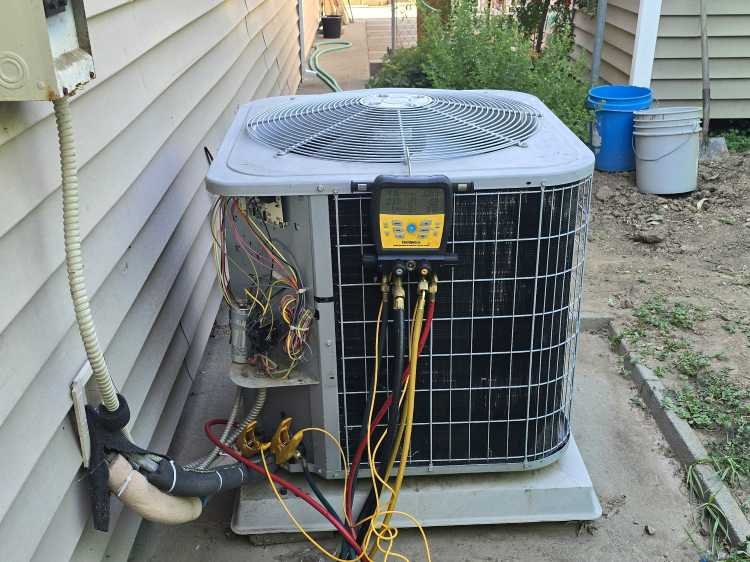
What actually breaks (it’s rarely brand-specific)
Here’s what we replace, week in and week out, across every brand on every list: capacitors, contactors, condenser fan motors, control boards, and coils. A capacitor is a small part that fails on premium and budget equipment alike, usually because it spent five summers baking at 105 degrees.
That’s the unglamorous truth behind reliability rankings. The gap between the best and worst brand is real but modest. The gap between a well-installed, maintained system and a rushed one is enormous. Correct sizing, a proper charge, and a yearly tune-up move the needle further than the badge does.
If a brand does concern you, the useful question isn’t “is it reliable” but “what happens when it breaks.” Can we get the part locally this week? We dug into where that goes wrong in our guide to air conditioner brands to avoid.
What reliability means in a Sacramento summer
National reliability numbers assume national run times. Ours aren’t national. A system here runs hard from May through September, so it accumulates wear faster than the same unit in a milder place.
That tilts our advice toward durability over headline efficiency, and toward brands whose parts sit on a local shelf. A slightly less efficient unit that’s back running the same afternoon beats a marvel of engineering waiting on a part from out of state.
So what would we tell a neighbor?
- Trane or American Standard if you want the strongest warranty and the satisfaction record.
- Day & Night or Armstrong if you want the reliability data and do not care about the badge, since you are buying Carrier and Lennox engineering at a discount.
Then judge the installer harder than you judged the brand.
For the full picture, see our guides to the best central air conditioner brands and the best air conditioner brands overall. And for budgeting, our new HVAC system cost guide gives real installed ranges by size. If something’s already broken, our repair diagnostic is a flat $69 across Sacramento and the surrounding towns, and it goes toward the fix.
Frequently asked questions
What are the most reliable AC brands?
In Consumer Reports’ member survey of 13,306 owners, Armstrong and Day & Night were the standouts for reliability, while Trane, American Standard, Bryant, Lennox and Carrier earned top marks for owner satisfaction. Armstrong is built by Lennox International’s Allied Air, and Day & Night is a Carrier brand, so both are major-manufacturer engineering sold under a less famous badge.
Are the most reliable air conditioner brands the same as the best ones?
No. Reliability measures how often a system has problems. “Best” usually mixes in efficiency, comfort, quiet and price, and satisfaction scores also capture the dealer experience. The lists genuinely differ.
How often do central AC systems have problems?
About 19% of central AC systems purchased between 2009 and 2024 had at least one problem, according to Consumer Reports’ member survey. That’s roughly one in five, across all brands, which is the baseline no brand eliminates.
Does a longer warranty mean a more reliable AC?
It’s the best proxy available. Manufacturers set warranty terms using their own failure data, so a 12-year compressor warranty like Trane’s is the company betting its own money. Just check that you register the unit in time, usually within 60 to 90 days, and note that most warranties cover parts but not labor.
What part fails most often on an air conditioner?
Capacitors, contactors, condenser fan motors, control boards and coils, and they fail across every brand. Most failures trace back to heat, age, sizing and installation quality rather than the badge on the unit.