


A dual fuel system, sometimes called a hybrid system, pairs an electric heat pump with a gas furnace. It is more common in cold climates, where a heat pump alone struggles on the coldest days. In Sacramento it can still make sense in some homes. Here is how it works and how to decide.
How a dual fuel system works
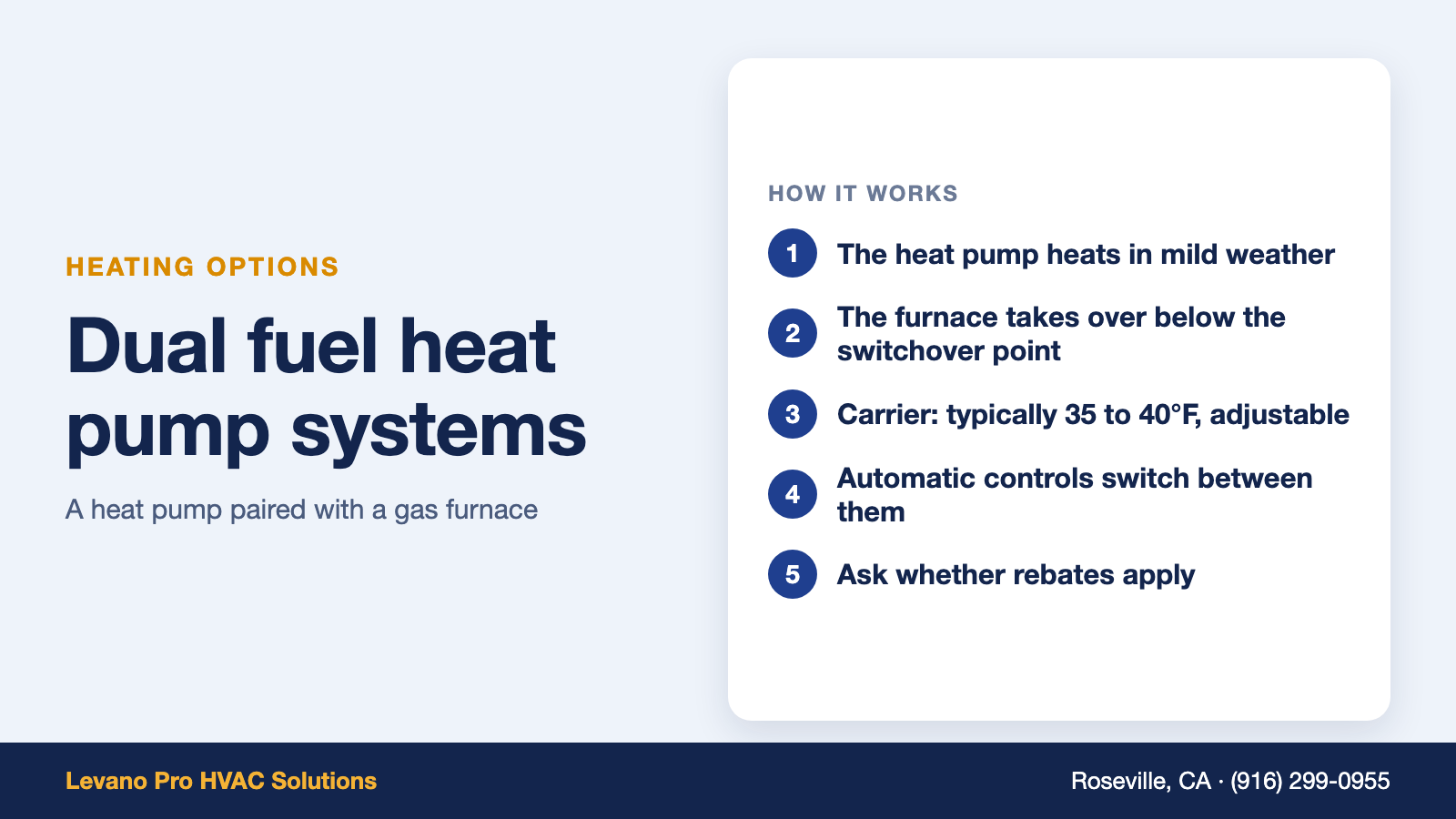
Carrier describes a dual fuel system as an electric heat pump combined with a gas furnace under automatic controls. In mild weather, the heat pump does the heating, and it also cools in summer. When the outdoor temperature drops below a set switchover point, called the balance point, the controls turn off the heat pump and the gas furnace takes over. Carrier says the typical switchover falls between 35°F and 40°F, and a technician can adjust it.
What it needs
- A heat pump outdoor unit and a compatible indoor coil
- A gas furnace with a compatible thermostat or control
- A thermostat that supports dual fuel operation
- Proper sizing for both heating sources
When it makes sense
- You already have a good gas furnace and want to add a heat pump instead of replacing both.
- Your gas and electricity prices make gas cheaper on the coldest days.
- You want a backup that does not depend on electric resistance heat.
When a heat pump alone is simpler
Sacramento winters are short and mild, so a heat pump alone covers most heating hours in many homes, with backup heat for the coldest ones. Adding a furnace means paying for two heating systems. See heat pumps below freezing and heat pump vs furnace in Sacramento.
Cost and rebates
A dual fuel system costs about as much as a heat pump plus the furnace work. For a heat pump alone, see heat pump replacement cost. SMUD’s rebates are written for gas-to-electric conversions, with their own requirements, and we could not confirm from SMUD’s page whether a dual fuel system qualifies. Ask SMUD or a SMUD Contractor Network installer before you buy. See SMUD heat pump rebates. The federal 25C credit ended on December 31, 2025.
Questions to ask a contractor
- At what temperature will the system switch to gas, and can you adjust it?
- What are the heating and operating costs of each source in my home?
- Do you do a load calculation for both?
- Is the system eligible for any rebate in my utility area?
- Does the price include the permit and Title 24 testing? See HVAC permits in the Sacramento area.
Thermostat settings
A heat pump should not be set back sharply, because it can trigger backup heat. See our thermostat settings guide.
We install heat pumps and furnaces in Roseville, Rocklin, Folsom and Elk Grove. See our heat pump services or contact us.
Frequently asked questions
What is a dual fuel heat pump system?
Carrier describes it as an electric heat pump combined with a gas furnace, run by automatic controls. The heat pump handles heating in mild weather, and the system switches to the gas furnace when it gets colder than a set temperature.
At what temperature does a dual fuel system switch to gas?
Carrier says the typical switchover is between 35°F and 40°F, and that a technician can adjust it. The best setting depends on your gas and electricity prices and your equipment.
Is a dual fuel system better than a heat pump alone?
It depends on your climate and costs. In a mild climate like Sacramento’s, a heat pump alone may cover most hours, and a second heat source adds equipment cost. Dual fuel can make sense if you already have a good gas furnace and want to keep it for the coldest days.
Does SMUD give a rebate for a dual fuel system?
SMUD’s rebates are written for gas-to-electric conversions, and the program has its own requirements. We could not confirm from SMUD’s page whether a dual fuel system qualifies, so ask SMUD or a SMUD Contractor Network installer before you buy.
Is there a federal tax credit for a dual fuel system?
No. The federal 25C credit ended for property placed in service after December 31, 2025.