


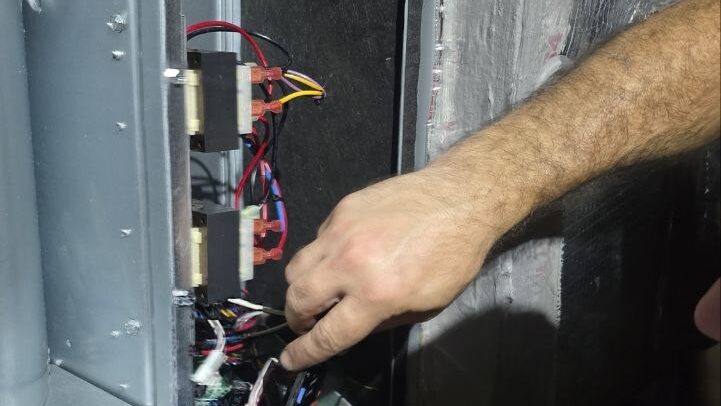
Two different things get called “the furnace fuse,” and they point to different problems. One is the small automotive-style fuse on the control board, usually rated at 3 amps. The other is the breaker in your electrical panel. Here is how to tell which one you are dealing with and what each one is telling you.
The 3 amp fuse on the control board
Most furnaces and air handlers built in the last couple of decades have a small plug-in fuse on the control board. It protects the 24 volt low voltage circuit: the thermostat, the contactor coil in the outdoor unit, the gas valve and the safety switches. When the system is dead and the board shows no lights, or shows a fault, this fuse is one of the first things we check.
A fuse that blows once can be a fluke. A fuse that blows again right after being replaced means something in the low voltage circuit is shorted. The usual suspects:
- Damaged thermostat wire. Rodents in attics and crawlspaces chew it. Staples pinch it. A wire rubbed through against sheet metal touches ground.
- A shorted contactor coil in the outdoor air conditioner or heat pump.
- The condensate float switch or pump wiring, especially where water has reached the connections.
- Wiring disturbed during a thermostat swap. Two conductors touching at the wall plate is enough.
- A failing component on the board itself, less often.
A useful clue: if the fuse only blows when the system calls for cooling, the short is almost always on the cooling side, meaning the wire to the outdoor unit or the contactor. If it blows the moment you touch the thermostat, look at the thermostat wiring.
Never install a bigger fuse
It is tempting to put in a 5 amp or 10 amp fuse so it stops blowing. Please do not. The fuse is sized to protect the transformer and the thin low voltage wiring. A larger fuse lets the short keep drawing current until the transformer or the board burns, which turns an inexpensive wire repair into a board and transformer replacement, and it creates a fire risk in the wall or attic where the damaged wire runs.
The breaker in the panel
If the breaker for the furnace or air handler is tripping, the problem is on the line voltage side. Common causes:
- A failing blower motor drawing too much current as its bearings wear
- Electric heat strips in a heat pump air handler, which draw the most current of anything in the system
- A shorted inducer motor on a gas furnace
- Loose or damaged line voltage wiring
- An old or weak breaker that trips below its rating
Reset a tripped breaker once. If it trips again, leave it off and call. Repeatedly resetting a breaker that is protecting against a fault is how electrical fires start. The same logic applies to the outdoor unit, which we cover in an AC tripping the breaker.
What you can safely check
- Look for obvious damage to the thermostat wire where it enters the furnace and at the thermostat.
- Check the drain pan for standing water near the float switch.
- If you recently replaced the thermostat, confirm no bare wire ends are touching at the wall plate.
Beyond that, the board, the transformer and the line voltage side need a meter and someone who knows where the live terminals are. Turn the power off at the service switch before opening any panel.
What we do
We isolate the low voltage circuit section by section, disconnecting the thermostat, the outdoor unit and the accessories one at a time until the short disappears. That finds the actual fault instead of feeding the system fuses. On the line voltage side we measure motor current draw against its rating. Our diagnostic is a flat $69 and it is credited toward the repair.
Related: furnace will not turn on, thermostat not working, heat pump not turning on, and our heating services page.
Frequently asked questions
Why does my furnace keep blowing the 3 amp fuse?
The 3 amp fuse protects the 24 volt control circuit. When it blows repeatedly, something in that circuit is shorted, most often damaged thermostat wire, a shorted contactor coil in the outdoor unit, or wiring near the condensate switch.
Can I put a bigger fuse in my furnace?
No. A larger fuse lets the short keep drawing current until the transformer or control board burns, and it creates a fire risk where the damaged wire runs.
Why does the fuse only blow when the AC turns on?
That points to the cooling side of the low voltage circuit: the wire running to the outdoor unit or the contactor coil inside it.
Why does my furnace breaker keep tripping?
Line voltage problems such as a failing blower or inducer motor, electric heat strips in a heat pump air handler, damaged wiring or a weak breaker. Reset it once, and call if it trips again.
Can rodents cause my furnace to blow fuses?
Yes. Chewed thermostat wire in attics and crawlspaces is a common cause of shorts in the low voltage circuit.
How much does it cost to fix a furnace that keeps blowing fuses?
Our diagnostic is $69 and credited toward the repair. Most shorts come down to a wire repair or a contactor. A burned transformer or board costs more.