


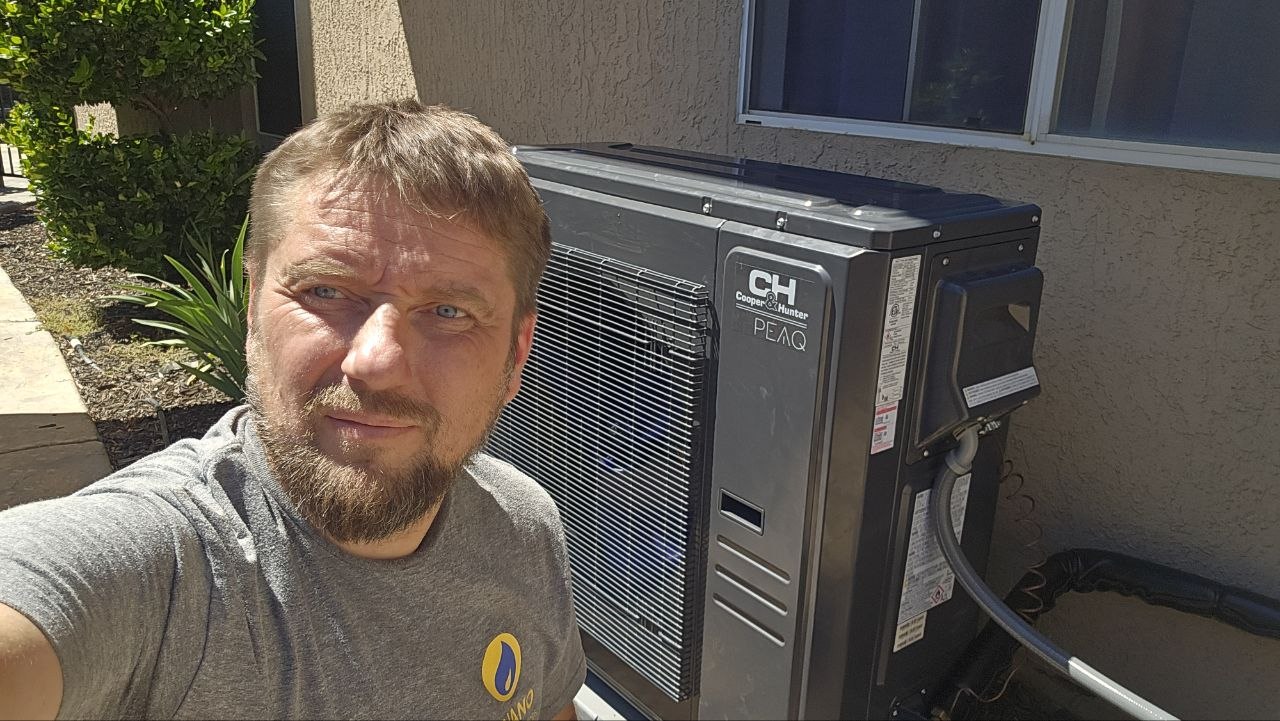
Most homes in Roseville have central air, and most of them have at least one room it never quite reaches. The bonus room over the garage, the converted garage that became an office, the addition built after the original ductwork was sized. A ductless mini-split fixes that one room without opening a single wall for ducts.
This guide covers what a mini-split installation costs in Roseville in 2026, what the permit involves, how Roseville Electric fits in, and when a mini-split is the wrong answer.
Where a mini-split makes sense in a Roseville home
A mini-split is a heat pump with an outdoor unit and one or more indoor heads, connected by a refrigerant line set and a small electrical and drain line. No ducts. That makes it the obvious choice in four situations:
- Garage conversions and additions. Extending the existing ducts to a new room usually starves the rest of the house. A dedicated head keeps both comfortable.
- Hot upstairs rooms. In two-story homes the upstairs bedrooms often run several degrees warmer than downstairs on a July afternoon. We explain why in upstairs hot, downstairs cold.
- Homes with no ducts at all. Older cottages and some single-story ranch homes were built with wall heaters. A multi-zone system gives them heating and cooling without an attic duct run.
- Replacing a gas wall heater or window units. One system replaces both and runs on electricity.
What a mini-split installation costs in 2026
These are the 2026 national ranges from the cost guides at Angi, HomeGuide and others, installed:
- Single zone, one outdoor unit and one indoor head: roughly $1,200 to $5,500.
- Two or three zones, one outdoor unit and two or three heads: roughly $4,000 to $9,000.
- Four or five zones, effectively a whole-house ductless system: roughly $7,500 to $14,500.
What moves a Roseville job up or down inside those ranges:
- The electrical panel. Every mini-split needs a dedicated circuit. A panel with open space keeps the cost down. A full panel, common in homes from the 1990s, can mean a panel upgrade first.
- Line set length. The farther the indoor head is from the outdoor unit, the more copper, insulation and labor.
- Head type. Wall-mounted heads are the most common and the least expensive. Ceiling cassettes and slim ducted units cost more.
- Efficiency. Higher-efficiency and cold-climate models cost more up front and less to run.
For a deeper breakdown by zone and brand, see our mini-split installation cost guide for the Sacramento area. If you are not sure how big a unit the room needs, start with what size mini-split do I need.
Permits in Roseville
A new mini-split is a mechanical installation with a new electrical circuit, so it goes through the City of Roseville building permit process. In California, new systems also fall under Title 24 energy rules, which include verifying the refrigerant charge. A quote that leaves out the permit is a quote for an unpermitted job, and that can come back when you sell the house or file an insurance claim.
Ask every contractor the same three questions: is the permit included, is the electrical work included, and who schedules the inspection.
Roseville Electric and rebates
Roseville is not in SMUD territory. Electricity comes from Roseville Electric, the city-owned utility, and that is the program that matters for rebates here. Roseville Electric has run heat pump rebates, including for ductless systems, and its rules have required a City of Roseville building permit and an invoice with model numbers. Program amounts and status change, so check the current list at roseville.ca.us or call Roseville Electric before you choose equipment. Our guide to SMUD and Roseville Electric rebates explains how the two utilities differ.
When a mini-split is the wrong answer
- The whole house is uncomfortable, not one room. That usually points to the central system or the ducts. Sealing leaky ducts often costs less than adding heads. See duct sealing vs replacement.
- Five or more rooms need heads. At that point a central heat pump on existing ducts is often cheaper. We quote both side by side when that is the case.
- The room is tiny and rarely used. A smaller head or simply better airflow from the existing register may be enough.
How we install a mini-split
We look at the room, the wall where the head will go, the path for the line set, the panel and the spot for the outdoor unit before we quote. The quote lists the equipment model numbers, the permit and the electrical work on one page. Single-zone and multi-zone options are quoted side by side when either would work.
We install ductless systems across Roseville, Rocklin, Granite Bay, Lincoln and the rest of the Roseville area. Details are on our ductless mini-split service page, or contact us to set up a visit.
Frequently asked questions
How much does a ductless mini-split cost to install in Roseville?
The 2026 national cost guides put a single-zone system at roughly $1,200 to $5,500 installed, two or three zones at about $4,000 to $9,000, and a four or five zone whole-house system at about $7,500 to $14,500. Permits, electrical work and line set length move a Roseville job within those ranges.
Do I need a permit for a mini-split in Roseville?
Yes. A new mini-split is a mechanical installation with a new electrical circuit, so it goes through the City of Roseville building permit process. Ask whether the permit is in the quote.
Does Roseville Electric offer a rebate for mini-splits?
Roseville Electric has run heat pump rebates, including for ductless systems, and the rules have required a City of Roseville building permit and duct testing where ducts are involved. Programs change, so check the current list at roseville.ca.us before you buy.
Which rooms in a Roseville home suit a mini-split best?
Rooms the central system never reaches well: converted garages, additions, bonus rooms over the garage and upstairs bedrooms that stay hot in July. A single-zone unit handles one of those without touching the main system.
Can a mini-split heat my house in winter?
Yes. A ductless mini-split is a heat pump, so it heats as well as cools. Roseville winters are mild enough that a correctly sized unit carries a room through the coldest nights without backup heat.