


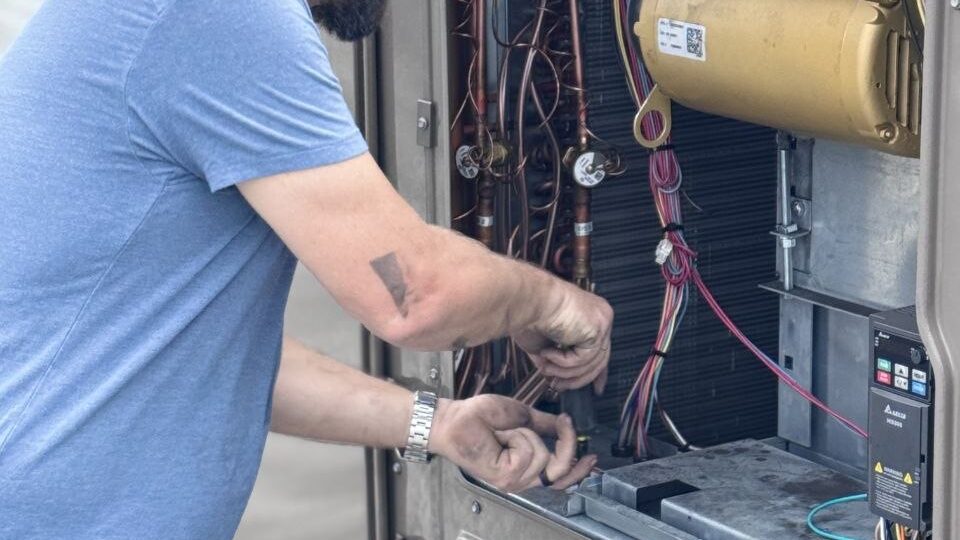
It is a reasonable question. A new system is expensive, the equipment is available online, and plenty of homeowners are handy. The short answer in California is that you are allowed to do more than most people assume, and far less than the online listings suggest, because of refrigerant rules, permits and warranties. Here is where the lines actually are.
What California law allows
California’s contractor licensing law has an owner-builder exemption. Under Business and Professions Code section 7044, a property owner can build or improve a structure on their own property without a contractor’s license, as long as the improvements are not intended for sale and the owner personally does the work or uses their own employees paid wages.
So in principle, doing work on your own home is legal. In practice, three other rules decide whether you can finish an HVAC replacement yourself.
Rule one: refrigerant requires EPA certification
Under Section 608 of the Clean Air Act, EPA regulations require that technicians who maintain, service, repair or dispose of equipment that could release refrigerants into the atmosphere be certified. A split system air conditioner or heat pump involves exactly that work: recovering the old refrigerant, brazing, pulling a vacuum and charging the new system.
This is the part most DIY plans run into. Swapping a condenser without certification is not a gray area, and releasing refrigerant is a federal violation. It is also where most amateur installations fail technically, because a system that is not evacuated properly or charged by weight will underperform and shorten the compressor’s life.
Rule two: a replacement needs a permit and HERS verification
An HVAC replacement requires a permit from your city or county. Owner-builders can pull one, but you then take on the responsibility the permit carries, and California’s energy code calls for third-party HERS verification on replacement work. The inspection and the test have to pass.
Skipping the permit is the route many people take, and it creates a problem later. Unpermitted HVAC work comes up during home sale inspections and appraisals, and it can complicate an insurance claim if something goes wrong.
Rule three: warranties usually expect professional installation
Many manufacturers condition their parts warranty on installation by a licensed contractor and on registration within a set window. Equipment bought online and self-installed often ends up with limited or no warranty coverage. On a compressor, that is the difference between a covered part and paying for it yourself.
What you genuinely can do yourself
Plenty of HVAC work needs no license, no certification and no permit:
- Replace the air filter on schedule
- Swap a thermostat on a conventional system, with the power off and the wires labeled first. Communicating systems are the exception, because a generic thermostat can disable their variable speed features.
- Rinse the outdoor condenser coil with a garden hose, power off, no pressure washer
- Flush the condensate drain line with distilled vinegar
- Clear space around the outdoor unit and keep supply and return grilles unblocked
Our summer HVAC checklist goes through these step by step.
What about DIY mini-splits?
Some ductless systems are sold as pre-charged units with quick-connect line sets, designed so the refrigerant stays sealed and no brazing or charging is needed. Those change the refrigerant question, but not the others. You are still mounting a head on a wall, drilling through an exterior wall, running a condensate drain with the right slope and wiring a dedicated circuit. A poorly sloped drain is the most common reason mini-splits end up leaking inside the house, which we cover in heat pump or mini-split leaking water inside.
Check whether the model’s warranty requires professional installation, and whether your jurisdiction requires a permit for the electrical work.
Gas furnaces are a different category
Replacing a gas furnace means disconnecting and reconnecting a gas line and installing a venting system that carries combustion gases out of the house. Mistakes there are not an efficiency problem, they are a carbon monoxide problem. We would not recommend it as a DIY project under any circumstances.
What it costs to have it done properly
A professional replacement includes the permit, HERS verification, certified refrigerant work, a verified charge and warranty registration. Local ranges are in what a new HVAC system costs and heat pump replacement cost. For a number specific to your home, the cost calculator takes about a minute, and our guide on comparing HVAC quotes helps you judge what you are offered.
If you tried a repair yourself and something is now not working, that is fine to admit. Our diagnostic is a flat $69 and it is credited toward the repair. Installation details are on our installation and replacement page.
Frequently asked questions
Is it legal to replace my own AC in California?
California’s owner-builder exemption lets you do work on your own home without a contractor’s license, but refrigerant handling requires EPA Section 608 certification, and a replacement needs a permit and HERS verification. In practice, the refrigerant rule stops most DIY condenser replacements.
Do I need a license to work on refrigerant?
Yes. EPA Section 608 regulations require certification for anyone who maintains, services, repairs or disposes of equipment that could release refrigerants. That covers recovering, brazing and charging a split system.
Can I pull a permit for HVAC work myself?
Owner-builders can generally pull permits for work on their own home, but they take on responsibility for the work passing inspection and the HERS verification that California’s energy code calls for on replacements.
Can I install a mini-split myself?
Pre-charged DIY mini-splits with quick-connect line sets avoid refrigerant handling, but you still need correct mounting, a properly sloped drain and a dedicated electrical circuit. Check the warranty terms and your local permit rules first.
Will installing my own HVAC void the warranty?
Often, yes. Many manufacturers require installation by a licensed contractor and registration within a set window for full parts coverage.
What HVAC maintenance can I do myself?
Changing filters, rinsing the outdoor coil with the power off, flushing the condensate line, keeping the area around the outdoor unit clear and swapping a conventional thermostat are all reasonable homeowner tasks.