


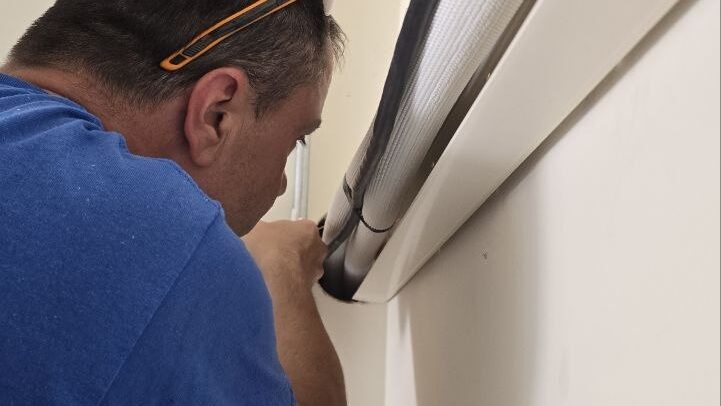
Water coming out of the indoor side of a heat pump, or dripping down the wall under a ductless mini-split head, is one of the more alarming things a system can do and one of the more fixable. Before the causes, one thing that is not a problem at all.
Water outside is usually normal
In heating mode, a heat pump’s outdoor coil runs cold enough to collect frost, and the unit periodically runs a defrost cycle to melt it. During defrost you may see water pouring off the outdoor unit and sometimes a cloud of steam. That is normal. On a Sacramento winter morning in the high 30s, a heat pump that defrosts every so often is working as designed.
In cooling mode, water dripping from a pipe outside near the unit is also normal. That is the condensate line doing its job.
Water inside the house is different. That always means water is going somewhere it should not.
Do this first
- Turn the system off. For a mini-split, use the remote, then the breaker if water is near the electrical connections.
- Protect the floor and the wall. Towels under a ductless head, a pan under an air handler.
- Look at the filters. On a mini-split, open the front panel and slide them out. If they are grey and matted, that is very likely your answer.
Ducted heat pump: water from the air handler
A ducted heat pump’s indoor unit, the air handler, has an evaporator coil and a drain pan just like a central air conditioner. The causes of a leak are the same:
- A clogged condensate line. Algae and sludge build up all summer. The pan overflows. A cup of distilled vinegar down the line each spring prevents most of these.
- A frozen coil that is thawing. A dirty filter or low refrigerant ices the coil, and the melt overwhelms the pan. Our article on a frozen AC applies to heat pumps in cooling mode too.
- A failed condensate pump where water has to be lifted out.
- A tripped float switch with water still standing in the pan.
Air handlers in Natomas and Elk Grove attics usually have a secondary drain pan. If that pan is full, the primary drain has already failed and the next stop is your ceiling.
Ductless mini-split: water from the indoor head
Mini-splits are where most of these calls come from, and the causes are more specific.
Dirty filters and a dirty coil
The single most common cause. Mini-split filters are meant to be rinsed every few weeks to a couple of months in heavy use, and most never are. A restricted head runs the coil colder, it frosts, and the melt overflows the small tray inside the unit. Rinse the filters and let them dry before putting them back.
A blocked drain hose
The condensate from a ductless head drains through a small hose that runs with the refrigerant lines through the wall. Algae, dust or an insect nest in that hose backs water up into the head. It often drips from the bottom edge of the unit.
The drain hose has no slope, or runs uphill
Mini-split drains rely on gravity. If the hose was run level or with a dip where it passes through the wall, water pools and eventually comes back into the room. This is an installation problem, and it frequently shows up in the first season.
The head is not level
If the mounting plate is off level toward the wrong side, water runs away from the drain outlet inside the unit and spills over the front. A level on top of the head tells you in seconds.
A failed condensate pump
On heads mounted where gravity drainage is not possible, such as an interior wall, a small pump lifts the water out. When it fails, the unit leaks.
Low refrigerant
A slow leak at a flare connection drops the charge, the coil ices, and the thaw produces water. Refrigerant is not consumed, so low charge always means a leak that needs finding. Our article on refrigerant costs explains why that matters more now.
When it is time to call
Clean filters and a clear drain fix a lot of these. Call if the leak continues after that, if water is running down the inside of the wall, if the head is dripping near its electrical connections, or if the unit is icing up. Water inside a wall cavity does damage you will not see until later.
What we do
We clear and flush the drain, check its slope and the level of the head, test the condensate pump if there is one, clean the coil and blower wheel if they need it, and verify the refrigerant charge if the coil has been freezing. Our diagnostic is a flat $69 and it is credited toward the repair.
More on ductless systems is on our mini-split page and heat pump services. If your heat pump is not warming the house, see heat pump not heating, and for the cooling-side version of this problem, AC leaking water.
Frequently asked questions
Why is my mini-split leaking water inside?
The most common causes are dirty filters that let the coil frost and overflow, a blocked or poorly sloped drain hose, a head that is not level, and a failed condensate pump. Rinsing the filters and clearing the drain fixes many of them.
Is it normal for a heat pump to leak water outside?
Yes. In heating mode the outdoor unit runs defrost cycles that melt frost off the coil, which can produce a lot of water and some steam. In cooling mode, water from the outdoor condensate line is also normal. Water inside the house is not.
Why is my heat pump air handler leaking water?
Usually a clogged condensate line, a frozen coil that is thawing, a failed condensate pump or a full drain pan. The causes are the same as a central air conditioner’s indoor coil.
Can a mini-split leak because it was installed wrong?
Yes, and it is common. A drain hose run without enough downward slope, a dip where the hose passes through the wall, or a head mounted slightly off level will all cause leaks, often in the first season of use.
How often should I clean my mini-split filters?
Every few weeks to a couple of months during heavy use, and more often with pets or dusty conditions. Rinse them with water, let them dry fully, and put them back. Dirty filters are the leading cause of mini-split leaks.
Can low refrigerant cause a heat pump to leak water?
Indirectly, yes. Low charge makes the indoor coil run too cold and ice up, and when it thaws the water overflows. Low refrigerant always means a leak somewhere in the system, which should be found and repaired.