


Water is the one HVAC symptom that gets expensive while you are deciding what to do about it. A capacitor failing costs you comfort. A drain pan overflowing above a bedroom costs you a ceiling.
So the order matters here. Turn the system off first, then read the rest.
The first five minutes
- Switch the system off at the thermostat, not just up a few degrees. Set the mode to OFF so the blower and compressor both stop. As long as it runs, it keeps making water.
- Find where the water is. Around the indoor unit, in the drain pan under it, or dripping through a ceiling below an attic install.
- Mop it up. Then you can tell later whether it is still leaking or you are looking at the same puddle.
Water dripping from the outdoor unit on a cooling day is usually normal condensation and not a fault. It is the indoor side that matters.
Where the water comes from in the first place
Your air conditioner is a dehumidifier that happens to cool. Warm indoor air hits a cold evaporator coil, moisture condenses on it, and that water runs into a pan and out through a drain line. Making water is the system working correctly.
A leak almost never means the system started producing water it should not. It means the water stopped going where it was supposed to go.
The five things that actually cause it
1. A clogged condensate drain line
This is the answer most of the time. The drain line is a small PVC pipe, and over a season it grows algae and sludge. Once it blocks, the pan fills and overflows.
The tell is water in the pan with no ice anywhere and no other symptom. If your system has a float switch, it may have shut itself off instead of overflowing, which is the good outcome and the reason those switches exist.
2. A frozen coil that thawed
If the evaporator coil iced over and then melted, the pan gets far more water at once than it was designed to carry, and it overflows even with a clear drain. Look for ice or frost on the copper lines or the coil itself.
Ice is never the root problem. Something restricted airflow or the refrigerant charge is low, which we cover below.
3. A rusted or cracked drain pan
On a system past fifteen years or so, the pan itself can corrode through. Water then leaves the pan without ever reaching the drain. This is worth knowing because it shifts the conversation toward the age of the whole system, and our guide to how long an air conditioner lasts explains where that line usually falls.
4. A drain line that came loose or was never sloped right
Condensate drains by gravity. If the line sags, gets bumped in an attic, or was installed with a low spot, water sits and eventually backs up. We find this on systems that leaked from the first summer and were never right.
5. A failed condensate pump
Some installs, particularly basements and closets below the drain point, use a small pump instead of gravity. Pumps fail. If yours has one and it is silent while the pan fills, that is your answer.
The frozen coil, in more detail
If you found ice, do this: turn the system off, set the fan to ON, and leave it for a few hours. The blower moving room-temperature air over the coil thaws it faster and more safely than anything else. Do not chip at it, and do not point a heat gun at it.
Then work out why it froze. There are only two families of cause.
Not enough air over the coil. A blocked filter, a closed-off return, collapsed flex duct, or a failing blower motor. In Sacramento the filter is the usual suspect, and in a smoke summer filters load up in weeks rather than months.
Not enough refrigerant. A low charge drops the coil temperature below freezing. Low charge means a leak, because refrigerant is not consumed. Topping it up without finding the leak means paying for it again next year.
Here is the part worth taking seriously: running a system with a frozen coil pushes liquid refrigerant back toward the compressor, and compressors do not survive that indefinitely. A frozen coil that keeps getting switched back on is how a repair turns into a replacement. If it freezes again within a week of thawing, stop using it and get it looked at. That symptom overlaps with an AC blowing warm air, and often they are the same fault seen at different stages.
Why this is a Sacramento problem specifically
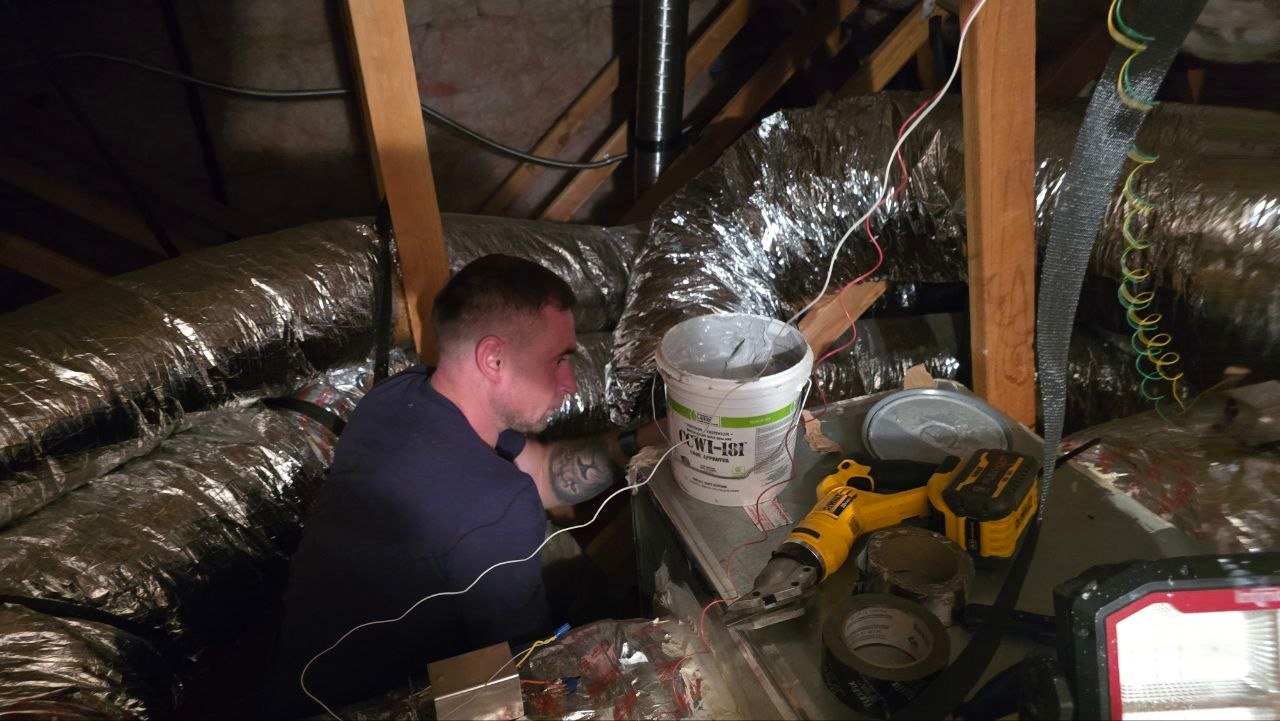
Most of Natomas, Pocket, and the newer tracts have the air handler in the attic. That single fact changes the stakes. A drain problem in a garage is a puddle. The same problem in an attic is a stained ceiling, wet insulation and sometimes drywall.
It is also why properly installed systems here have a secondary pan and a float switch under the unit. When the primary drain clogs, the switch cuts the system before the water finds your ceiling. If your system shut itself off during a hot week with no other warning, check the pan before assuming something expensive broke. That is the same fault described in our guide to an AC that will not turn on.
Drain lines here clog reliably over a season, and clearing them is a routine part of a tune-up. It is genuinely one of the cheapest problems to prevent and one of the more expensive to ignore.
When to call and when it can wait
Call today if:
- water is coming through a ceiling
- the pan refills after you empty it
- there is ice that returns after thawing
- the unit is in the attic and you cannot see how much water is up there
Ceilings do not get cheaper overnight.
It can wait a day if there is a small amount of water at the unit, it is not spreading, and the system is off. It is not doing further damage while it sits switched off.
Do not panic about water dripping outside from the condenser on a hot day. That is the system working.
What we do about it
Diagnostic is a flat $69 and it goes toward the repair if you have us do the work.
We clear the drain line properly rather than just blowing it out and hoping, check the slope and the connections, inspect the pan for corrosion, test the float switch to confirm it would actually cut the system next time, and check filter, airflow and refrigerant charge if there was ice involved. If the coil froze, we find out why instead of thawing it and leaving.
We cover Sacramento, Roseville and the surrounding towns, with dedicated pages for Roseville, Rocklin, Folsom, Citrus Heights, Elk Grove and Sacramento AC repair. More on our AC repair page, or call (916) 299-0955.
Wondering about the bill before you call? Our guide to what AC repairs cost in Sacramento lists the common repairs with real ranges and how to read an estimate.
Heavy water with little or no cooling usually means the coil froze and is now thawing. That has its own causes and its own first steps in why your AC is frozen.
If the water is pooling under the furnace rather than the indoor coil, see why a furnace leaks water. For a heat pump air handler or a ductless head, see heat pump or mini-split leaking water inside.
Frequently asked questions
Why is my AC leaking water inside the house?
Usually a clogged condensate drain line. Your air conditioner removes moisture from the air by design, and that water drains away through a small pipe. When algae and sludge block it, the pan fills and overflows. Other causes are a frozen coil that thawed, a corroded pan, a drain line that sagged or came loose, and a failed condensate pump.
Is it dangerous to run an AC that is leaking water?
It risks water damage rather than being unsafe electrically in most cases, but the damage adds up fast if the unit is in an attic above living space. Switch the system off at the thermostat until it is fixed, because as long as it runs it keeps producing water.
Why is my AC coil frozen?
Either not enough air over the coil, from a blocked filter, closed returns, crushed ducting or a weak blower, or not enough refrigerant, which means a leak. Turn the system off and run the fan to thaw it. Running it frozen can damage the compressor.
Why is water dripping from my outdoor AC unit?
On a heat pump or during cooling, some water at the outdoor unit is normal condensation. It is the indoor unit and its drain pan that matter when you are looking for a leak.
How much does it cost to fix an AC leaking water?
Our diagnostic is a flat $69 across Sacramento and Roseville and it goes toward the repair. A clogged drain line is one of the cheaper fixes; a corroded pan or a refrigerant leak on an older system costs more, and we price both options rather than assuming.