


The air handler sits in a closet, garage or attic, so it gets ignored until something goes wrong. A few regular tasks keep it running efficiently, and a yearly professional visit catches the problems you cannot see. Here is what you can do, and what is better left to a technician.
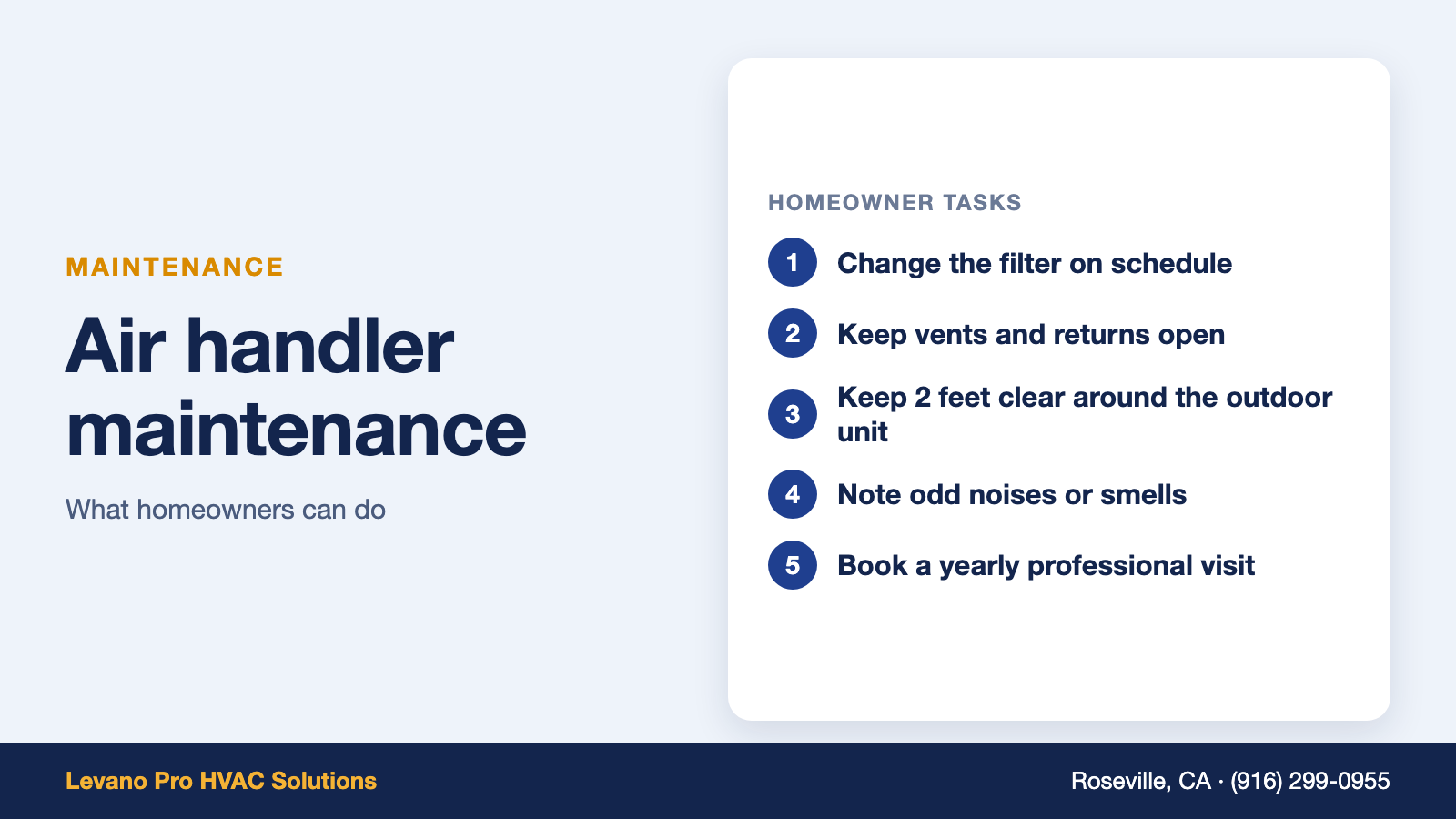
What homeowners can do
- Change the filter. The Department of Energy says to clean or replace filters once a month or as recommended. Trane says to change them year-round. See how often to change your HVAC air filter.
- Keep vents and returns open. Move furniture and rugs away so air can move freely.
- Keep two feet of clearance around the outdoor unit, as Trane advises, and clear leaves and debris.
- Look around the unit. Check for water, rust, ice or a drain line that has come loose.
- Note noises and smells. Write down when they happen. It helps a technician. See air handler making noise.
What to leave to a technician
- Cleaning the evaporator coil. Trane advises against using household cleaners on it.
- Clearing a clogged condensate line, unless you are sure which line it is. See air handler leaking water.
- Replacing motors, capacitors, contactors or control boards
- Checking refrigerant charge and airflow
- Electrical work of any kind
What a yearly service includes
The Department of Energy recommends professional maintenance once a year for a furnace or heat pump, and Trane recommends spring and fall maintenance for air handlers that handle both seasons. A visit commonly includes:
- Checking the blower motor, capacitor and wiring
- Inspecting the condensate drain, pan and float switch
- Checking the evaporator coil
- Checking airflow and the filter
- Testing the thermostat and safety controls
Ask for a written list of what was checked. See what a tune-up includes and costs and our maintenance service page.
Signs your air handler needs attention
- New noises such as humming, rattling or gurgling
- Water around the unit or stains on the ceiling beneath it
- Weak airflow from the vents
- A musty smell when the system starts. See why does my AC smell musty.
- Ice on the coil or refrigerant lines. See why is my AC frozen.
- A higher energy bill with no change in how you use the system
Safety around the unit
Do not open panels or reach into the unit while it has power. Do not store boxes, chemicals or paint against the air handler or furnace, and keep the area around it clear so a technician can reach it. If the unit is in an attic, make sure the access is clear and safe before a service visit.
A simple yearly schedule
- Monthly: check the filter and change it as needed.
- Spring: professional visit before cooling season. See HVAC summer prep checklist.
- Fall: professional visit before heating season. See HVAC winter prep checklist.
- Any time: call if you see water, ice, burning smells or hear new noises.
When the air handler is the problem
If the air handler will not turn on, see air handler not turning on. If it is failing and old, see air handler replacement cost and air handler vs furnace vs condenser.
We service air handlers in Roseville, Rocklin, Folsom and Elk Grove. Contact us to book a visit.
Frequently asked questions
What is an air handler?
It is the indoor unit of a split system that moves air through your ducts. It holds the blower and, in an air conditioner or heat pump system, the evaporator coil. In a gas system the furnace often does the same job. See our guide to air handler vs furnace vs condenser.
How often should an air handler be serviced?
The Department of Energy recommends professional maintenance once a year for a furnace or heat pump. Trane suggests spring and fall maintenance for an air handler that serves both cooling and heating.
Can I clean the evaporator coil myself?
No. Trane advises against cleaning evaporator coils with household cleaners. Coil cleaning is a technician task.
What should I check every month?
The air filter. The Department of Energy says to clean or replace filters once a month or as recommended, and Trane says to change them year-round.
How do I know my air handler needs attention?
Warning signs include new noises, water around the unit, weak airflow, a musty smell, ice on the coil or lines and a higher energy bill. See our guides on air handler noises and leaks.